How Multilingual Surveys Help Venues Capture Better Guest Feedback
Collecting visitor feedback is one of the best ways to understand what is working, what needs improvement, and how guests are experiencing an exhibit, program, or venue. But traditional surveys often miss a major part of the audience: guests who would rather respond in a language other than English.
Why Multilingual Feedback Matters
When surveys are only offered in one language, the data often reflects only a portion of the audience. Multilingual surveys help venues hear from more guests, including families, international visitors, multilingual communities, and people who may not feel comfortable sharing detailed feedback in English.
This creates better and more inclusive data. Venues can understand how different audiences experienced an exhibit, whether the content was impactful, what guests learned, what could be improved, and whether visitors felt the experience was worth the cost.
North Carolina Museum of Natural Sciences
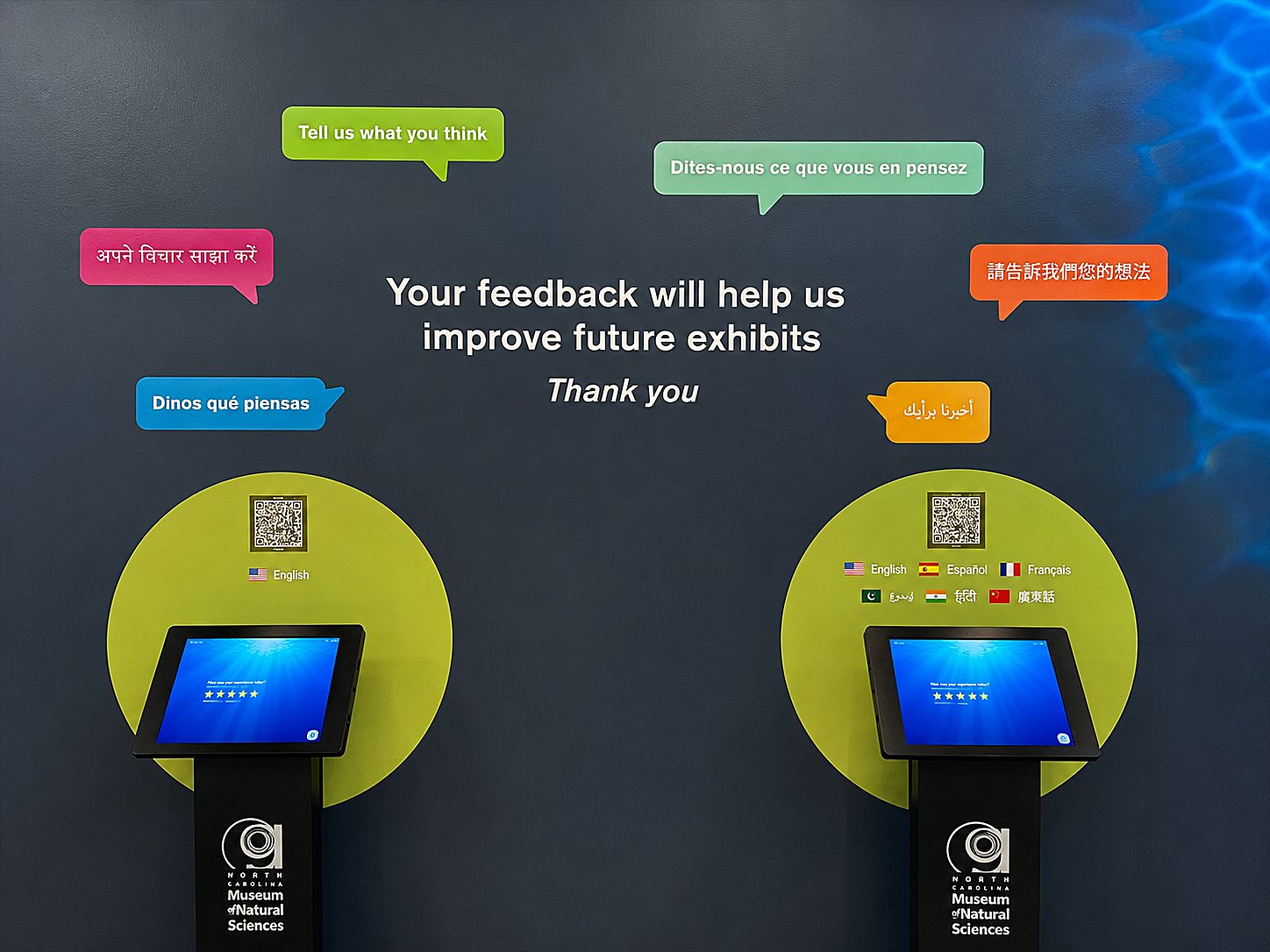
At the North Carolina Museum of Natural Sciences, guests leaving special exhibitions can take a survey through a large onsite survey wall, either by scanning a QR code or using one of the iPads available nearby.
The museum has collected thousands of survey responses for their exhibits, gathering valuable feedback on exhibit impact, content quality, visitor learning, likelihood to recommend, and whether guests felt the experience was worth the price.
For special exhibitions like Blue Whales and other major experiences, the museum can better understand what guests knew before entering, what they learned during the exhibit, and how the experience changed their perception or interest.
Because the survey interface is simple and user-friendly, guests can quickly provide meaningful feedback before leaving the exhibit area.
Global Research and Nonprofit Feedback
CheQRboard’s multilingual survey tools are also being used beyond traditional visitor feedback. One nonprofit organization is using the platform to collect responses from researchers around the world.
Instead of sending separate surveys in different languages or manually translating responses, they can send one survey that allows each researcher to respond in their preferred language. The team can then review all responses in English and compile reports more efficiently.
This makes it easier to collect global feedback, identify trends, and share findings across teams, funders, and stakeholders.
Better Surveys, Better Decisions
CheQRboard surveys are not limited to QR codes. They can be shared through email, text, post-visit follow-ups, tablets, kiosks, links, or onsite signage. The goal is to make feedback collection as easy and accessible as possible, wherever the guest or respondent is.
Surveys are available in 133+ languages, allowing guests to select their preferred language and complete the full survey in that language. Once submitted, responses are translated back into English, so venue teams can review, analyze, and report on feedback without needing to manage separate surveys or manually translate responses.
This helps venues collect feedback from a broader and more representative group of visitors, leading to better data and more informed decisions.
- Exhibit impact
- Visitor satisfaction
- Learning outcomes
- Price/value perception
- Likelihood to recommend
- Accessibility and inclusion
- Program feedback
- Event feedback
- Research and stakeholder input
At this point, you might as well book a demo.
No pressure. Just 20 minutes, a few ideas for your venue, and absolutely no 47-slide sales deck.